Anxiety & panic
Anxiety at night
You were fine all day. Then you got into bed, and within four minutes your brain opened a folder marked everything. Nothing changed except that you stopped moving.
The short answer
Anxiety spikes at night because you've removed every distraction that was holding it off during the day, not because anything got worse. Lying still with nothing to occupy your attention gives worry an empty stage. The most effective fixes are getting the thoughts out of your head before bed rather than in it, using a breath pattern with a long exhale, and — if you're awake more than about twenty minutes — getting out of bed so your brain stops learning that bed is where you think.
Nothing got worse — the noise floor dropped
All day your attention has somewhere to be: work, people, screens, movement, the next thing. Those aren't solving the worry, they're occupying the channel it needs. Lying down in a dark, quiet room removes all of them at once.
So the worry hasn't grown. It's just the only thing left in the room. That reframe matters, because the 11pm version of a problem feels categorically more serious than the 9am version of the same problem, and it usually isn't.
Worth remembering at 2am
Almost nothing looks the same in the morning. Not because you'll have solved it — because you'll have your daytime brain back. Late-night conviction is not insight, and it's a bad time to make decisions or send messages.
Do the thinking before you're horizontal
The single highest-return change is moving the processing earlier. Your brain loops at night partly because it hasn't been given any other opportunity to deal with the day.
- A brain dump, an hour before bed. Everything, unordered — worries, tasks, the thing you said badly. A brain dump works because a loop only keeps running while your mind believes it must hold the contents.
- Convert what you can into tomorrow's first action. Not a plan. One line: "email Sam." An open worry gets rehearsed; a decided next step usually doesn't.
- Give worry an appointment earlier in the day. Fifteen minutes at 6pm, deliberately. It sounds absurd and it measurably reduces night-time rumination — deferring works where suppressing doesn't.
If you're already lying there
- Lengthen the exhale. Don't count elaborately. In through the nose, out for roughly twice as long. 4-7-8 breathing is the standard bedtime pattern if you want structure.
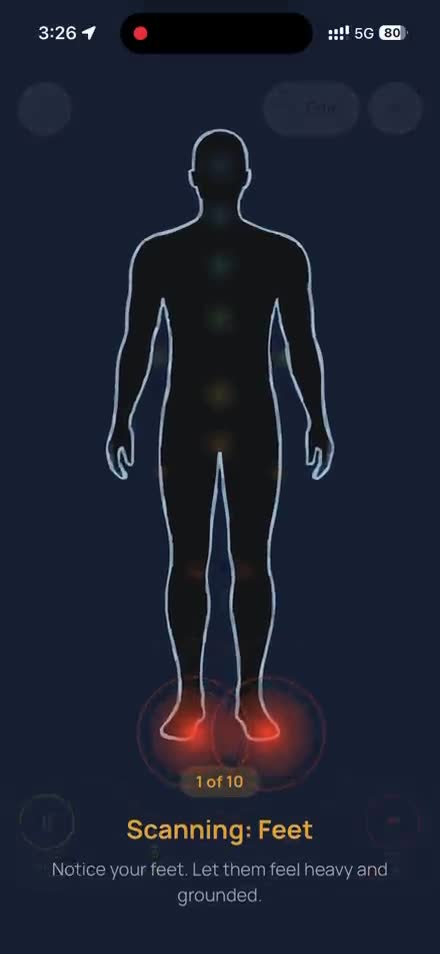
- Do a body scan downward. Attention to your feet, then slowly up — or down from your head. It gives your mind a job that isn't the worry, and it's boring in exactly the way that helps. See the body scan.
- Label the process, not the content. "I'm ruminating" rather than re-arguing the thought. That small step out is covered in how to stop overthinking.
- Stop checking the clock. Every check adds an arithmetic problem about how little sleep you'll get, which is itself activating. Turn it away.
- Drop the pressure to sleep. Trying hard to sleep is arousing, which is self-defeating. Aim for "resting quietly," which is genuinely restorative and much easier to achieve.
The 20-minute rule
If you've been awake and distressed for roughly twenty minutes, get up. Go to another room, keep the lights low, do something dull, and come back when you feel sleepy.
This is uncomfortable advice at 3am and it's the best-evidenced item on this page. It comes from cognitive behavioural therapy for insomnia (CBT-I), and the reason is associative learning: every hour spent lying in bed anxious teaches your brain that bed is a place for vigilance. Getting up protects the association. Lying there defending it does the opposite.
The 3am wake-up
Waking in the small hours and immediately finding your brain fully staffed is extremely common. Cortisol begins climbing in the second half of the night as part of the normal wake-up process, so you're surfacing into a body that's already mildly activated — the anxiety often precedes the thought rather than being caused by it.
Which is useful, because it means the content is not to be trusted. Whatever your brain hands you at 3am is being generated by a slightly alarmed body looking for a reason. Treat it as noise, use the 20-minute rule, and revisit in daylight.
The unglamorous baseline
None of the above compensates for the basics: a roughly consistent wake time, daylight early, caffeine finished by early afternoon, alcohol treated with suspicion (it gets you to sleep and then fragments the second half of the night), and screens dimmed late.
If this has gone on for months, ask about CBT-I specifically. It's the first-line treatment for chronic insomnia, it outperforms sleeping tablets over the long run, and it's under-prescribed largely because people don't know to ask for it.
Tools for this in the app

For the hour before, and the hour after.
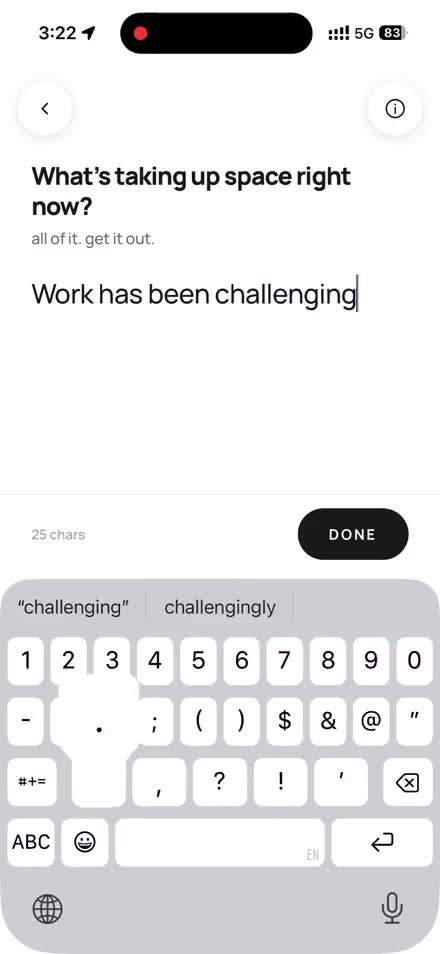
Brain Dump clears the day before you lie down. Body Scan and Rain give your attention somewhere quiet to be when you're already there.


Common questions
Why is my anxiety worse at night?
Because you've removed every distraction that was holding it off during the day. Work, people, screens and movement occupy the same attention that worry needs, so lying still in a dark room gives it an empty stage. Nothing got worse — the noise floor dropped, and the worry is simply the only thing left.
How do I stop overthinking at night?
Move the processing earlier: do a brain dump about an hour before bed, convert what you can into a single next action for tomorrow, and give worry a deliberate fifteen-minute window in the early evening. In bed, label the process ('I'm ruminating') rather than re-arguing the content, and lengthen your exhale.
Why do I wake up at 3am with anxiety?
Cortisol naturally begins rising in the second half of the night as part of waking up, so you surface into a body that's already mildly activated. The anxiety often comes before the thought rather than being caused by it, which means whatever your brain offers as the reason at 3am is worth treating as noise until daylight.
Should I get out of bed if I can't sleep?
Yes — if you've been awake and distressed for about twenty minutes, get up, keep lights low, do something dull, and return when sleepy. This comes from CBT-I and it's the best-evidenced strategy here. Lying in bed anxious teaches your brain to associate bed with vigilance, which makes future nights harder.
Not medical advice. These are general wellness techniques, not treatment for a medical or psychiatric condition. If anxiety, low mood, or intrusive thoughts are affecting your daily life, talk to a doctor or a licensed therapist. If you're in crisis, contact your local emergency number or a crisis line.
Sources
- American Academy of Sleep Medicine: cognitive behavioural therapy for insomnia (CBT-I) as first-line treatment for chronic insomnia.
- Bootzin, R. R. (1972). Stimulus control treatment for insomnia — origin of the get-out-of-bed rule.
- Nolen-Hoeksema, S. et al. (2008). Rethinking rumination. Perspectives on Psychological Science.