Mind & mood
How to stop overthinking
You've been over it eleven times. You haven't learned anything new since the second time. And you can't put it down, because stopping feels like being careless about something important.
The short answer
Overthinking is rumination, not problem-solving — the tell is that you're generating no new information, just re-running the same loop with the same inputs. Because it feels responsible, willpower alone rarely stops it. What works is changing the channel your brain is using: get the thoughts out of your head and onto paper, switch to a physical sensation, set a deliberate worry window, or decide the single next action and close the file.
The difference between thinking and looping
Real problem-solving moves. You consider something, learn something, and end up somewhere new — even if where you end up is "I need more information."
Rumination doesn't move. You start at the same place, follow the same path, arrive at the same place, and start again. The content feels urgent and important, which is exactly what makes it so hard to drop. It has the texture of being responsible.
A test that usually settles it
Ask: what do I know now that I didn't know twenty minutes ago? If the answer is nothing, you're not thinking it through. You're looping — and another lap won't help.
Why it's so hard to just stop
Two reasons. First, the loop is doing a job: it's giving you the feeling of control over something uncertain. Stopping means sitting with the uncertainty, which is precisely what you were trying to avoid.
Second, suppression backfires. Telling yourself not to think about something requires monitoring for the thought, which means holding it active. That's why "just stop overthinking it" has never once worked on anybody. You don't stop a loop by pushing against it — you stop it by giving your attention somewhere else to be.
Four ways to break the cycle
- Empty it out. A loop survives on being held in working memory. Write every strand down — messy, unordered, all of it. A brain dump ends the loop by making the rehearsal unnecessary; your brain stops repeating what's now safely recorded.
- Change channel to a sensation. You can't reason your way out of a reasoning loop. Something physical and specific — 5-4-3-2-1 grounding, cold water, a walk where you name what you see — occupies the same attention the loop needs.
- Give it an appointment. Set a fifteen-minute worry window later today. When the loop starts outside it, note the topic and tell yourself you'll take it up at six. This sounds like a trick that shouldn't work; it works because you're not suppressing the thought, you're deferring it, and your brain will accept a deferral it won't accept a denial.
- Convert it into one action, then close the file. Ask what the single next step is — send the email, look up the date, ask the question. Do it or schedule it. Anything that isn't a next action isn't solvable right now, and the loop is just charging you rent on it.
When it's loudest at night
Lying down removes every distraction that was holding the loop off during the day, which is why overthinking so often waits until the lights are out. That's common enough to have its own guide — see anxiety at night.
Naming it takes the charge out
There's a small, reliable move that helps more than it should: label the process instead of arguing with the content. Not "what if I handled that badly" but "I'm ruminating about that conversation."
That shift puts you outside the loop looking at it, rather than inside it. It's the same mechanism behind naming your emotions, applied to a thinking pattern instead of a feeling. From there, the choice point gives you somewhere to go next.
Be careful what you call overthinking
Not every long think is rumination. Some decisions genuinely deserve days. And if the looping is constant, keeps you from sleeping or working, or centres on intrusive thoughts you find disturbing, that's worth raising with a doctor or therapist — persistent rumination is a feature of both anxiety disorders and depression, and it responds well to proper treatment.
Tools for this in the app
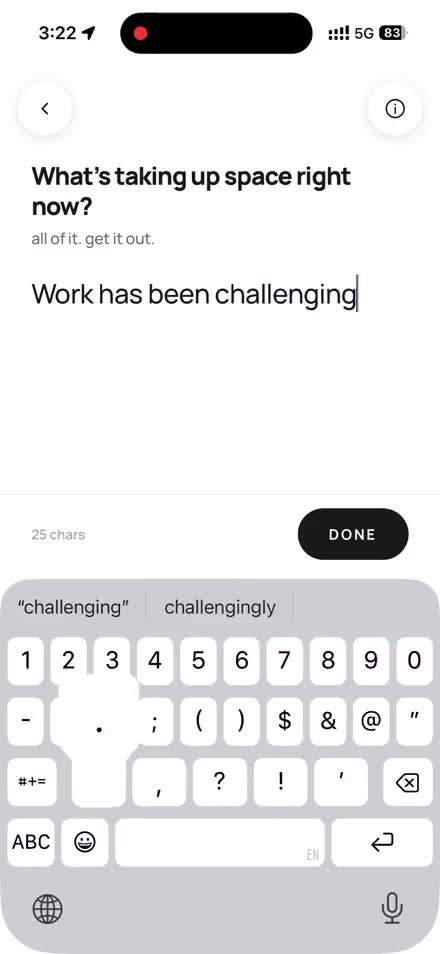
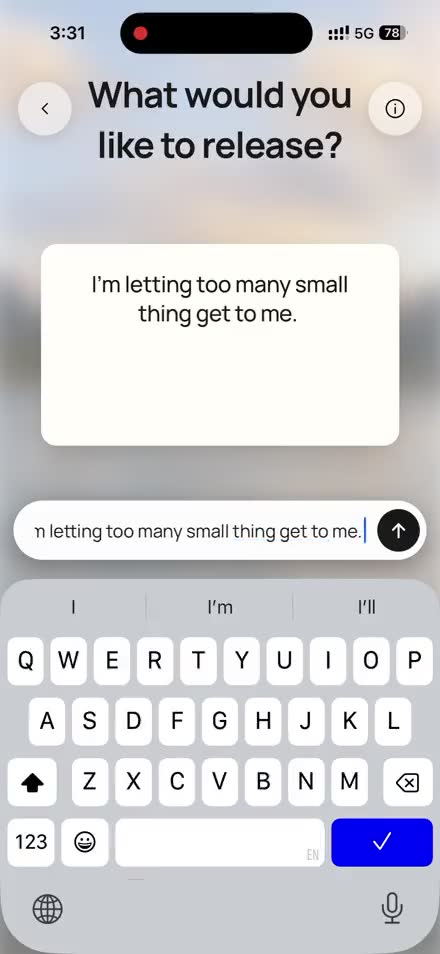

Somewhere to put it down.
Brain Dump gives the loop a place to go, and Release lets you watch a thought leave instead of arguing with it.


Common questions
Why can't I stop overthinking?
Because the loop is doing a job — it gives you a feeling of control over something uncertain, so stopping means sitting with the uncertainty you were avoiding. Suppression also backfires: telling yourself not to think about something requires monitoring for it, which keeps it active. Redirecting your attention works where pushing the thought away doesn't.
What's the difference between overthinking and problem-solving?
Problem-solving generates new information — you end up somewhere you weren't before. Rumination re-runs the same inputs and arrives back where it started. The quickest test is to ask what you know now that you didn't know twenty minutes ago. If the answer is nothing, another lap won't help.
Does writing things down actually help with overthinking?
Yes, and the reason is mechanical: a loop needs to be held in working memory to keep running. Writing it all down removes the need for your brain to keep rehearsing it, so the repetition loses its purpose. It works best when it's unordered and unfiltered rather than a tidy list.
Is overthinking a sign of anxiety?
It can be. Persistent rumination is a common feature of both anxiety disorders and depression, though plenty of people overthink without having either. If it's constant, stops you sleeping or working, or centres on intrusive thoughts you find distressing, it's worth talking to a doctor or therapist — it responds well to treatment.
Not medical advice. These are general wellness techniques, not treatment for a medical or psychiatric condition. If anxiety, low mood, or intrusive thoughts are affecting your daily life, talk to a doctor or a licensed therapist. If you're in crisis, contact your local emergency number or a crisis line.