Grounding
Grounding for dissociation
Not panic. The other thing — where the room goes slightly flat, your hands don't quite feel like yours, and you're watching the conversation from a few feet behind your own head.
The short answer
Dissociation is a protective disconnection from your surroundings, your body, or yourself — it usually shows up when a system has been overloaded for too long. Because you're under-stimulated rather than over-stimulated, calming techniques are the wrong tool; you need strong, unambiguous sensory input to come back. Cold, texture, sharp taste, movement, and naming things out loud work better than breathing exercises here.
What it actually is
Dissociation is a disconnection — from your surroundings, your body, your sense of self, or your memory. It sits on a spectrum, and the mild end is universal: missing your motorway exit, or reading a page four times without taking anything in.
The versions people find distressing usually go by two names:
- Derealisation. The world seems unreal, flat, dreamlike, or seen through glass. Colours can feel washed out and familiar places can feel like sets.
- Depersonalisation. You feel detached from yourself — your hands aren't quite yours, your voice sounds like someone else's, you're observing yourself from outside.
It's frightening, and it is very commonly mistaken for "going mad." It isn't that. It's closer to a circuit breaker: when a system takes more than it can process — acute stress, prolonged stress, exhaustion, trauma — turning the volume down on everything is a protective move.
Why calming techniques don't work here
This is the part most guides miss. Standard anxiety advice is built for too much — too much arousal, too much input, too much thought. So it soothes and quietens.
Dissociation is the opposite problem. You're already turned down. Soothing it further can deepen the fog, and closing your eyes to breathe often makes it noticeably worse.
The rule for this state
Turn the input up, not down. Strong, specific, unmistakable sensation. Eyes open. Out loud where you can.
What actually brings you back
- Cold, held. An ice cube in your palm, cold water on your wrists and face, a cold drink held rather than sipped. Cold is the most reliable single input because it's impossible to ignore.
- Strong taste or smell. Sour sweets, mint, coffee grounds, a strong essential oil. Taste and smell route differently from the senses that have gone quiet.
- Texture with your hands. Something with real grain — a rough wall, keys, corduroy, a hairbrush. Describe it as you touch it: ridged, cool, uneven.
- Bear weight. Push both palms hard into a wall for ten seconds. Press your feet down. Pressure and resistance produce a bodily signal that's hard to feel detached from.
- Name the room out loud. Not silently. "Blue mug. Window. My left shoe is untied." Speaking recruits your voice, your hearing, and your eyes at once — a step up from the silent version of 5-4-3-2-1.
- Orient to time and place. Say the date, the day, where you are, and your age. This is the standard clinical grounding move for a reason: it reattaches you to specifics.
- Move deliberately. Walk and count the steps. Stand up and sit down. Deliberate movement with attention on it is very different from drifting through the room.
Things that make it worse
- Checking whether it's still happening. Repeatedly testing how real things feel keeps your attention on the symptom and reliably extends it.
- Closing your eyes to breathe. Removes exactly the external input you need. If you want to breathe, do it with your eyes open and your attention on the room.
- Searching for what it means. At 2am, with the fog present, this becomes rumination — see how to stop overthinking.
- Alcohol and cannabis. Both commonly trigger or deepen depersonalisation. If you've noticed a pattern, that pattern is probably real.
Afterwards
Dissociation is usually a signal about load rather than a random event. It tends to show up after a long stretch of too much — poor sleep, sustained stress, no recovery. So the useful question afterwards isn't "what's wrong with me," it's "what has been too much, for too long."
The HALT check-in is a blunt but effective place to start, and the baseline section on nervous system regulation covers the slower work.
When to get help
Please take this seriously rather than managing it alone if: it's frequent or lasts hours, it started after a traumatic event, it's stopping you working or driving safely, you're losing time or finding evidence of things you don't remember doing, or it comes with thoughts of harming yourself.
Dissociation responds well to trauma-informed therapy, and persistent depersonalisation-derealisation is a recognised, treatable condition. It's also worth ruling out physical causes — certain neurological conditions, medications, and migraine can produce similar sensations, so a GP visit is a reasonable first step. If you're in crisis, contact your local emergency number or a crisis line.
Tools for this in the app
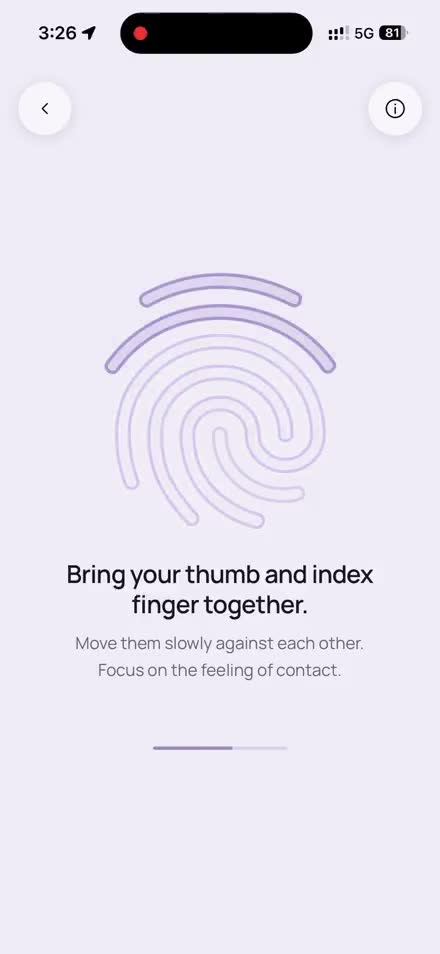


Something to put your attention on.
centered space's sensory tools give a drifting attention something specific and physical to hold — eyes open, no sitting still required.


Common questions
What does dissociation feel like?
Most often one of two things: derealisation, where the world seems unreal, flat or seen through glass, or depersonalisation, where you feel detached from yourself — your hands don't feel like yours, or you're observing yourself from outside. It's frightening and commonly mistaken for losing your mind, but it's a protective response to overload.
How do you ground yourself during dissociation?
Turn sensory input up rather than down. Hold something cold, taste something strong, touch a rough texture and describe it, press your palms into a wall, and name what's in the room out loud. Keep your eyes open. Standard calming advice is designed for too much arousal, whereas dissociation is the opposite problem.
Why do breathing exercises make dissociation worse?
Because they usually involve closing your eyes and turning attention inward, which removes the external input you need to reconnect. Dissociation is a state of being turned down, not turned up, so soothing it further can deepen the fog. If you want to use breathing, keep your eyes open and your attention on the room.
When should I get help for dissociation?
If it's frequent or lasts hours, started after a traumatic event, stops you working or driving safely, involves losing time, or comes with thoughts of self-harm. It responds well to trauma-informed therapy, and persistent depersonalisation-derealisation is a recognised and treatable condition. It's also worth ruling out physical causes with a doctor.
Not medical advice. These are general wellness techniques, not treatment for a medical or psychiatric condition. If anxiety, low mood, or intrusive thoughts are affecting your daily life, talk to a doctor or a licensed therapist. If you're in crisis, contact your local emergency number or a crisis line.