Connection
Social anxiety: before, during, and after
The event itself is often the shortest part. There's the week of dread before it, the ninety minutes of watching yourself during it, and then the drive home replaying one sentence you said at 8:40.
The short answer
Social anxiety runs in three phases, and each needs something different. Beforehand, the problem is anticipatory dread, which shrinks when you narrow the plan to something specific and small. During, the problem is self-focused attention — you're monitoring yourself instead of being present, and the fix is deliberately moving your attention outward onto other people. Afterwards, the problem is post-event rumination, and the rule is simple: don't hold the review.
Before: the dread does most of the damage
The anticipation is usually worse than the event. Days of rehearsing what could go wrong, running scenarios, and building the thing into something far larger than it turns out to be.
- Make the plan specific and small. Not "be normal." Something concrete: stay forty minutes, talk to two people, ask each of them one question. A vague goal can't be met, so it generates dread indefinitely; a specific one can be completed.
- Give yourself a planned exit. Knowing you'll leave at nine, and that it's allowed, lowers the pressure enough that people frequently stay longer.
- Don't over-rehearse. Scripting lines feels like preparation but keeps you in your head during the actual conversation, listening for your cue rather than to the person.
- Move before you go. A brisk walk, or box breathing in the car. Bring the physical baseline down before you arrive rather than fighting it in the room.
- Get it out of your head. A quick brain dump of every worst case, written down, usually looks much more manageable on a page than in a loop.
During: the attention trap
This is the mechanism that keeps social anxiety running. When you're anxious in a room, your attention turns inward — monitoring your voice, your face, whether you're sweating, how that sentence landed. You're effectively watching a live feed of yourself and grading it.
Which has two effects, both bad. You feel worse, because you're generating a constant stream of critical data. And you're actually less present, so conversation genuinely does get harder — which then confirms the fear.
The single most useful move
Deliberately push your attention outward. What colour are their eyes? What are they actually saying? What's the music? Curiosity about anything external is the direct antidote to self-monitoring, and you can only run one of them at a time.
- Ask questions. Practical and self-serving: it moves attention to them, and people reliably enjoy being asked about themselves.
- Drop your safety behaviours. Gripping a drink, standing near the door, over-preparing anecdotes, never pausing. They feel protective and they maintain the anxiety, because you never learn the thing would have been fine without them. Try dropping one at a time.
- Ground with your feet. Press them into the floor. Invisible, immediate, and it reconnects you to something outside your head.
- Let a pause be a pause. Silences feel about three times longer to the anxious person than to anyone else in the conversation.
After: don't hold the review
Post-event rumination is the phase people underestimate. The evening ended hours ago and you're still running the tape, isolating your worst sentence and replaying it.
The critical thing to know is that this review is not accurate. It's being conducted by an anxious brain with total recall for your own errors and near-zero data on what anyone else thought. It systematically inflates how noticeable everything was — everyone else was mostly thinking about themselves.
- Name it, don't join it. "I'm doing the post-mortem" rather than re-litigating sentence six. More on that in how to stop overthinking.
- Log what actually happened. One line: went, stayed forty minutes, talked to two people. Facts, not evaluation. Over time this builds a record your anxiety can't easily argue with.
- Refuse the tribunal. If a specific moment genuinely needs addressing, decide the one action and do it. Everything else is a review with no verdict and no purpose.
- Talk to yourself like a friend. You'd never grade someone else's evening this way. Self-compassion is the practical counterweight here.
Avoidance is what makes it grow
The hardest part to hear: every declined invitation makes the next one harder. Avoidance produces immediate relief, which reinforces it powerfully, and it removes every opportunity to discover the thing would have been survivable.
The way through isn't forcing yourself into the worst-case event. It's a graded ladder — smaller, briefer, lower-stakes situations first, repeated until they're boring, then the next rung. Boring is the goal. See also reconnecting with people.
When it's more than shyness
Social anxiety disorder is common, and it's one of the most treatable conditions there is — CBT with graded exposure has a strong evidence base. If it's shaping your choices, your career, or how much of your life you're living, that's not a personality trait you have to accept. It's worth a conversation with a doctor or therapist.
Tools for this in the app
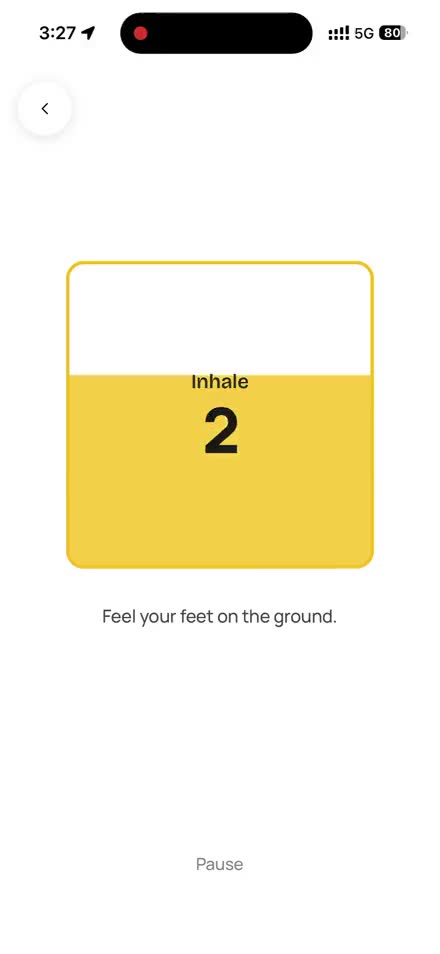
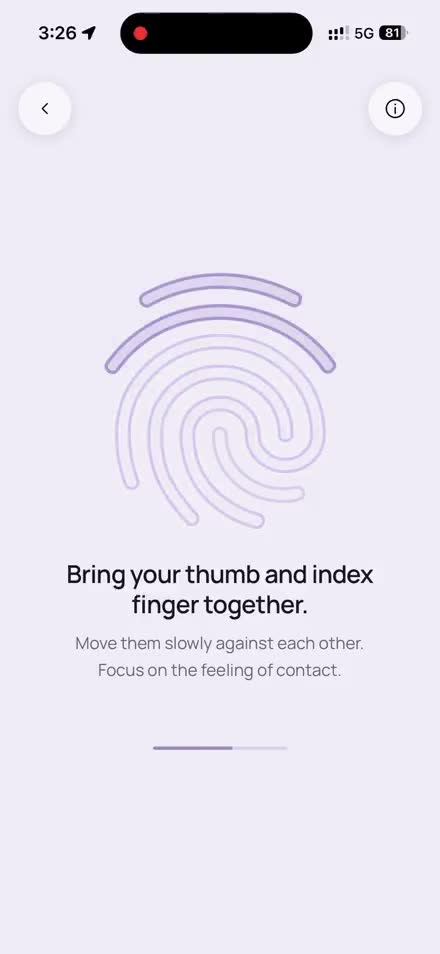

For the car before, and the drive home.
centered space fits the two moments that matter most — steadying yourself before you walk in, and putting the post-mortem down afterwards.


Common questions
How do I cope with social anxiety in the moment?
Deliberately move your attention outward. Social anxiety runs on self-focused attention — monitoring your voice, your face, how a sentence landed — which makes you feel worse and genuinely less present. Getting curious about the other person, asking questions, and noticing concrete details in the room directly competes with self-monitoring, because you can't run both at once.
Why do I replay social situations afterwards?
It's called post-event rumination and it's a core feature of social anxiety. The review isn't accurate: your brain has total recall of your own perceived errors and almost no data on what anyone else thought, so it systematically inflates how noticeable everything was. Naming it as the post-mortem, rather than joining in, is more effective than trying to argue each point.
What are safety behaviours in social anxiety?
Things you do to feel protected — gripping a drink, staying near the door, over-rehearsing stories, avoiding pauses. They feel helpful but maintain the anxiety, because you never get to learn the situation would have been fine without them. Dropping them one at a time is a standard part of treatment.
Does avoiding social situations make anxiety worse?
Yes. Avoidance gives immediate relief, which reinforces it strongly, and removes every chance to discover you'd have coped. The way out isn't forcing yourself into the hardest situation — it's a graded ladder of smaller, briefer, lower-stakes situations repeated until they're boring, then moving up a rung.
Not medical advice. These are general wellness techniques, not treatment for a medical or psychiatric condition. If anxiety, low mood, or intrusive thoughts are affecting your daily life, talk to a doctor or a licensed therapist. If you're in crisis, contact your local emergency number or a crisis line.