Everyday practice
Mood tracking: what it's actually for
Ask yourself how the last month has been and you'll answer from today. That's not a memory problem you can think your way out of, and it's the entire reason writing it down works.
The short answer
Mood tracking works because your memory of how you've been is unreliable in a specific, predictable way: whatever you feel right now colours how you recall everything before it. A bad Tuesday genuinely becomes "it's always like this." Logging one number a day gives you an outside record that argues back — most people who actually look at their own trend line are surprised how spread out and infrequent the really low days turn out to be. It's best at surfacing triggers and cycles you'd never spot from inside. It backfires when checking in becomes another way to monitor yourself all day.
Your memory is a bad witness
Recall is mood-congruent: the state you're in when you remember shapes what you retrieve. Feeling low, you'll reach the low weeks first and the flat ones will feel representative. Feeling fine, last month softens.
So the question "how have you been?" is answered almost entirely by today. That's why "it's always been like this" feels so unarguably true in a bad week, and why it so often isn't. You can't correct for this by trying harder to be objective. You correct for it with a record.
The whole point in one line
Tracking isn't for the day you log it. It's so that in three months you have something that disagrees with you.
What the trend line actually shows you
This is the part that's easy to undersell in a description and genuinely different to experience. A trend view renders your check-ins as a coloured line — green toward the top, sliding through teal and purple into orange and red near the bottom. Then you look at how much of it is actually orange or red.
For most people, it's less than they expected. Negativity bias means hard days get stored more vividly and get pulled up first, so your felt sense of "I've been low a lot" tends to run well ahead of the record. Seeing the low points as a handful of scattered dots surrounded by a return to your usual range, rather than a spreading pattern, is the correction made visually instead of verbally — you don't have to take anyone's word for it, including your own.
A calendar view does something similar from a different angle: every logged day gets a colour on the same low-to-high gradient, so a month renders as something you can take in at a glance rather than a statistic you have to trust. A month that's mostly green and teal, with a few orange days scattered through it, tends to land differently than reading "you were doing fine 80% of the time" as a sentence — even though it's the same information.
Why this actually works
Two separate mechanisms point the same way. Negativity bias means hard days are weighted more heavily in memory than good or ordinary ones, so a visual record is correcting a real distortion, not a manufactured one. And visible evidence of your own coping — a mostly-green month, a check-in streak — is one of the more reliable sources of genuine confidence there is: it's easier to believe you're managing when you're looking at proof rather than trying to recall it.
A running streak count works on the same logic. The number itself is almost beside the point — it's a small, repeated piece of evidence that you showed up, which is exactly what's hardest to remember on the days that felt worst.
It's a real technique, not an app gimmick
Self-monitoring is a standard component of cognitive behavioural therapy, not something apps invented. Therapists have used mood and thought records for decades, for two reasons.
First, the data. Patterns that are invisible from inside a week become obvious across two months. Second, and less obviously, the act of logging is itself a small intervention: naming where you are interrupts being fully inside it, which is the same mechanism behind naming your emotions.
What to log
- One number beats a paragraph. A single rating you'll actually do daily is worth more than a journal entry you'll abandon by Thursday. Consistency is the whole value — a record with gaps everywhere can't show you a trend.
- Log at roughly the same time. Mood has a daily shape. Comparing a 7am entry to a 10pm one mostly measures the time of day, which will muddy everything else.
- Add context only if it's one word. "Slept badly." "Deadline." Enough to jog your memory later, not enough to become a chore.
- Don't skip the good days. They're the comparison. A log of only bad days just proves you were having a bad day when you logged.
What to actually look for
Not the daily number. The daily number is noise, and staring at it is how tracking goes wrong.
- The shape over weeks. Is the floor rising? Are the dips shorter than they were? Recovery speed matters more than peak height.
- What sits next to the dips. Look at what's in the two days before a low, not the day of it. Sleep, alcohol, an unresolved conversation, a Sunday.
- Cycles you'd never notice. Weekly, monthly, seasonal. These are close to impossible to see from inside and obvious on a chart.
- Evidence against the story. The single most useful moment is looking at eight decent weeks while your head insists this has been going on forever.
When it turns into rumination
This is the failure mode nobody warns you about. Tracking is meant to take a snapshot and let you get on with your day. It goes wrong when it becomes a running commentary — checking how you feel every hour, grading yourself, treating a lower number as a failure.
At that point you've built a self-surveillance habit and dressed it up as self-awareness, and it will make you worse, not better. Signs to watch for:
- You check in several times a day rather than once.
- A low entry feels like a bad mark rather than information.
- You're comparing today to yesterday constantly.
- You've started deciding how the day is going based on the number.
If that's happening, log less often, not more. And if the reviewing has become its own loop, how to stop overthinking applies directly.
Where the data lives matters
Worth thinking about before you pick anything. A mood log is one of the most sensitive records you will ever create — a timestamped history of your mental health. Plenty of trackers store that on a server, and some have monetised it.
In centered space, Patterns entries are stored on your device. They aren't uploaded, sold, or attached to your identity. That's a deliberate constraint rather than a feature we added later, and it's the reason there's no web dashboard.
If the pattern is the answer
Tracking is a tool for noticing, not a treatment. If your log shows a persistent low stretch, a clear seasonal pattern, or dips that keep deepening, that record is genuinely useful to bring to a doctor or therapist — it's far better evidence than trying to reconstruct six months from memory in a ten-minute appointment.
That's arguably the best use of it: not self-diagnosis, but showing up with something real to point at.
Tools for this in the app
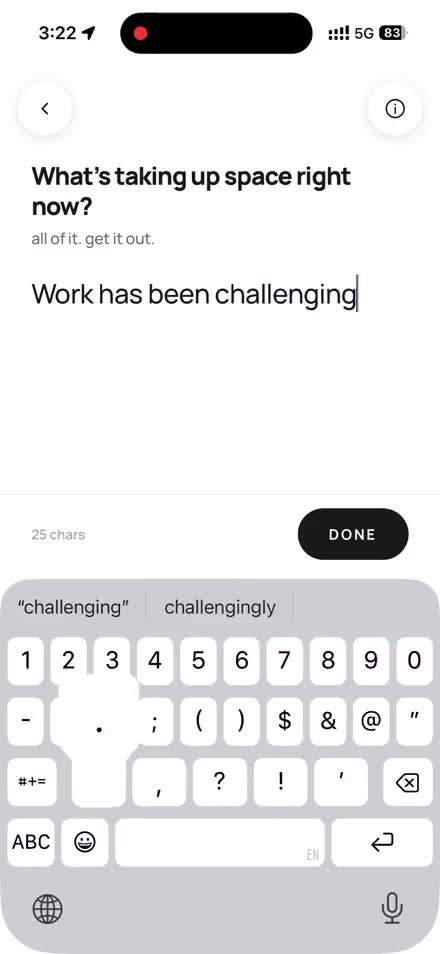

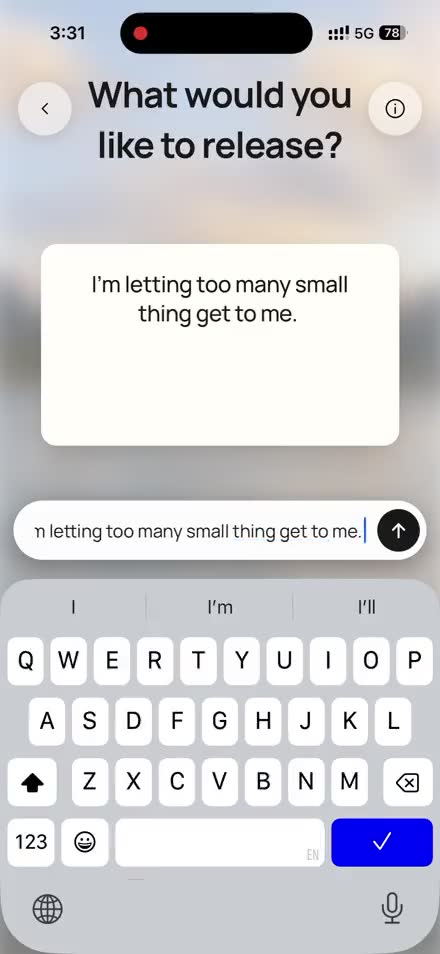
Patterns, built in.
A nine-point check-in, a timeline, a calendar, and a trend line for mood over time — kept on your device, never sold.


Common questions
Does mood tracking actually help?
Yes, with a specific mechanism. Memory of how you've been is mood-congruent — whatever you feel now colours how you recall the past — so a written record gives you something that argues back when your head says 'it's always been this bad.' Self-monitoring is also a standard component of cognitive behavioural therapy, not an app invention.
What should I log in a mood tracker?
One number, at roughly the same time each day, plus at most a one-word note for context. A single rating you'll actually keep up beats a journal entry you abandon within a week, because consistency is what makes a trend visible. Log the good days too — they're the comparison that makes the dips meaningful.
Can mood tracking make anxiety worse?
It can, if checking in becomes a running commentary rather than a daily snapshot. Warning signs are logging several times a day, treating a low score as a failure rather than information, or deciding how your day is going based on the number. If that's happening, log less often rather than more.
What should I look for in my mood history?
Not the daily number, which is mostly noise. Look at the shape over weeks — whether the floor is rising and whether dips are getting shorter — and at what happened in the two days before a low rather than on the day itself. Weekly, monthly and seasonal cycles are nearly invisible from inside and obvious on a chart.
Why does seeing my mood on a calendar or trend line feel reassuring?
Two mechanisms point the same way. Negativity bias means hard days are stored more vividly and recalled more easily than good or ordinary ones, so your felt sense of how often you've struggled usually runs ahead of the record — seeing low days as a handful of scattered points rather than a spreading pattern corrects that distortion. Separately, visible evidence of your own coping is one of the more reliable sources of genuine confidence, which is why a mostly-green month or a check-in streak tends to land as reassurance rather than just information.
Not medical advice. These are general wellness techniques, not treatment for a medical or psychiatric condition. If anxiety, low mood, or intrusive thoughts are affecting your daily life, talk to a doctor or a licensed therapist. If you're in crisis, contact your local emergency number or a crisis line.
Sources
- Korotitsch, W. J. & Nelson-Gray, R. O. (1999). An overview of self-monitoring research in assessment and treatment. Psychological Assessment.
- Shiffman, S., Stone, A. A. & Hufford, M. R. (2008). Ecological momentary assessment. Annual Review of Clinical Psychology.
- Bower, G. H. (1981). Mood and memory. American Psychologist — on mood-congruent recall.
- Baumeister, R. F., Bratslavsky, E., Finkenauer, C. & Vohs, K. D. (2001). Bad is stronger than good. Review of General Psychology — on negativity bias.
- Bandura, A. (1977). Self-efficacy: toward a unifying theory of behavioral change. Psychological Review — mastery experience (direct evidence of your own capability) as the strongest source of self-efficacy.