Everyday practice
Meditation for beginners (including if you can't sit still)
You've been told meditation would help. You've tried sitting with your eyes closed, lasted ninety seconds, noticed your mind was everywhere, and concluded you're bad at it. You're not. You were handed one version of a much bigger thing.
The short answer
Meditation is practising where your attention goes — nothing more mystical than that. Your mind wandering is not failure; noticing it wandered and bringing it back is the exercise, and each return is one repetition. If sitting still makes you more agitated, use an anchor with movement or sensation instead of silence: paced breathing, a body scan, sound, or something visual to follow. Two minutes done often beats twenty minutes you dread.
What meditation actually is
Strip away the cushions and the incense and meditation is one repeated move: you pick something to hold your attention on, you notice when your attention has left, and you bring it back. That's it. That's the whole mechanic.
Everything else — the posture, the eyes closed, the timer, the tradition — is packaging around that move. Useful packaging for some people. Actively counterproductive for others.
The misunderstanding that makes people quit
Almost everyone starts believing the goal is an empty mind, and that a wandering mind means they're doing it wrong. So they sit down, their mind wanders within seconds, and they take that as evidence of failure.
But the wandering isn't the interruption of the practice — it's the raw material of it. If your attention never left, you'd get no repetitions. A session where you drifted off forty times and came back forty times is a better workout than one where you stayed put.
Reframe that changes everything
You are not trying to hold a still mind. You are practising the return. Every time you notice you've drifted and come back, that's one rep — and the rep is the point.
If sitting still makes it worse
For a lot of people — particularly restless, anxious, or ADHD brains — removing all external input doesn't produce calm. It hands the floor entirely to the internal noise, and the volume goes up. That's a real effect, not a lack of discipline.
The fix isn't to force it. It's to choose a louder anchor:
- Anchor to a paced breath. Something to follow rather than sit inside. Box breathing gives your attention a shape and a count to track.
- Anchor to the body. A body scan moves systematically through physical sensation, so there's always a next place to go.
- Anchor to sound. Rain, tones, or ambient noise. Passive listening asks much less of you than silence does.
- Anchor to something visual. Watching something move and settle occupies the visual system that otherwise goes looking for stimulation.
- Anchor to movement. A walk where you count your steps or name what you pass is meditation. So is washing dishes with your attention genuinely on the water.
How to actually start
- Start at two minutes. Not ten. Two minutes you'll repeat beats twenty you'll avoid, and the research on habit formation is far kinder to small and frequent than to long and heroic.
- Attach it to something you already do. After you brush your teeth, before you start the car, once you've sat down at your desk. A cue you already have is worth more than an intention.
- Pick one anchor and stay with it for two weeks. Switching techniques every day is its own form of avoidance.
- Expect the boredom. Around day four it gets dull. Dull is not a sign it isn't working — it's usually the first sign your baseline is dropping.
- Count returns, not minutes. If you need a number to feel like you did something, count how many times you came back.
What to expect, honestly
Meditation has decent evidence behind it for stress and anxiety, mostly from structured programmes like MBSR practised over weeks. It is not a fast fix and it is not a treatment for a psychiatric condition. Nobody becomes calm in a week.
What tends to change first isn't your mood — it's the gap. You catch yourself mid-spiral a little sooner. You notice the tight jaw before it becomes a headache. That noticing is what everything else in coping skills is built on, which is why it's worth the two minutes.
One caveat worth stating plainly: for some people — particularly with a trauma history — extended silent meditation can bring up more than it settles. If that's your experience, anchored and shorter practices are a better fit, and it's worth working with a therapist rather than pushing through alone.
Tools for this in the app
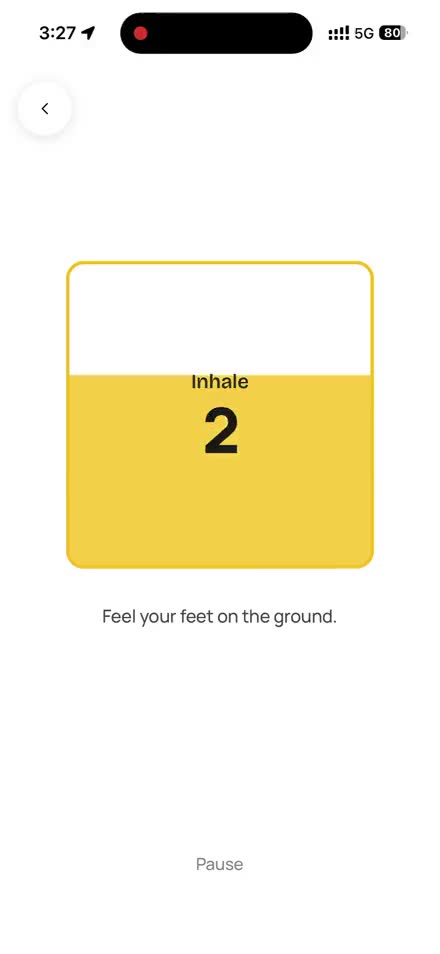
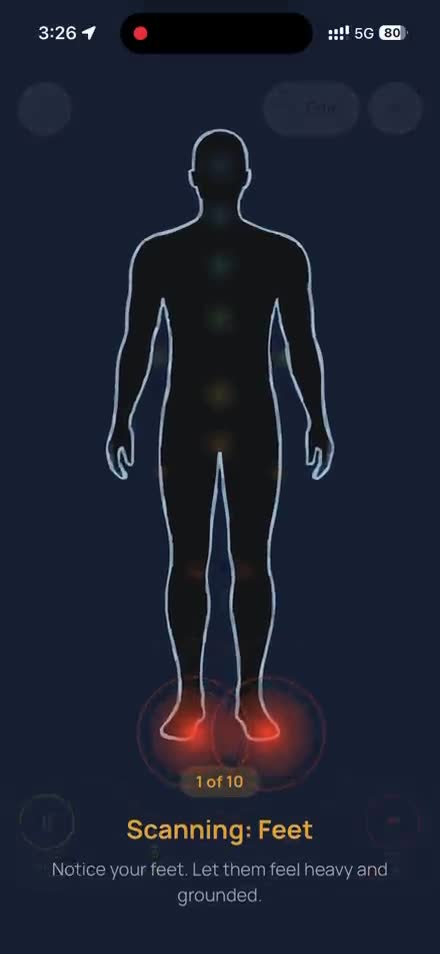

Something to follow, not sit inside.
centered space is built around anchored, guided practices — paced breathing, body scans, and visual tools — for the people silent meditation doesn't suit.


Common questions
How do I meditate if I can't sit still?
Use a louder anchor than silence. Paced breathing you follow by count, a body scan that moves through sensation, ambient sound, something visual to watch, or a walk where you name what you pass all count as meditation. Removing every external input often raises internal noise rather than lowering it, which is a real effect and not a discipline problem.
Is it normal for my mind to wander when meditating?
It's not just normal, it's the exercise. Noticing your attention has drifted and bringing it back is the repetition you're there to do. A session where you drifted forty times and returned forty times gives you more practice than one where you stayed put the whole time.
How long should a beginner meditate for?
Two minutes, daily, is a better starting point than ten minutes occasionally. Short and frequent builds the habit; long and heroic tends to get abandoned in the second week. Extend it only once you notice you're no longer negotiating with yourself about whether to do it.
Does meditation actually help with anxiety?
There's reasonable evidence that structured mindfulness programmes practised over weeks reduce stress and anxiety symptoms. It works gradually rather than immediately, and it isn't a treatment for a diagnosed condition. What usually improves first is how early you catch yourself in a spiral, not how you feel day to day.
Not medical advice. These are general wellness techniques, not treatment for a medical or psychiatric condition. If anxiety, low mood, or intrusive thoughts are affecting your daily life, talk to a doctor or a licensed therapist. If you're in crisis, contact your local emergency number or a crisis line.