Coping skills
Coping skills for anxiety that work in the moment
Most lists of coping skills are 100 items long and useless in the moment you actually need one. This one is sorted by what's happening — a body that won't settle, a mind that won't stop, an urge you're about to act on, or a day you're facing alone.
The short answer
A coping skill is anything that helps you get through a hard moment without making it worse. The ones that work fastest are body-based: slow your exhale, get cold water on your face, name five things you can see. Mind-based skills — naming the feeling, reframing the thought, putting it all on paper — work better once your body has settled. You don't need fifteen. You need two or three you'll actually reach for.
What a coping skill actually is
A coping skill is not a cure and it isn't positive thinking. It's a specific, repeatable thing you do that lowers the intensity of a hard moment enough that you can think again. That's the whole bar. It doesn't have to fix the situation, and it doesn't have to make you feel good — it just has to keep you from making the moment worse.
That framing matters, because most people quit coping skills for the wrong reason: they try one, it doesn't erase the anxiety, and they decide it "didn't work." Bringing a 9 down to a 6 is it working.
Start with the body — it's faster
When you're genuinely activated, your thinking brain is not fully available. Trying to reason your way out is like arguing with a fire alarm. Body-based skills work faster because they don't require the part of you that's currently offline.
- Lengthen your exhale. A longer out-breath than in-breath is the single most reliable lever you have. The physiological sigh — two inhales through the nose, one long exhale — is the fastest version.
- Breathe in an even square. Box breathing (4 in, 4 hold, 4 out, 4 hold) is better than the sigh for holding calm over several minutes rather than dropping a spike.
- Cold on the face. Cold water, a cold can against your cheekbones, or stepping outside. It's abrupt, physical, and it interrupts a spiral more effectively than anything you can say to yourself.
- Move the energy out. Anxiety is mobilising energy with nowhere to go. Thirty seconds of stairs, push-ups against a wall, or shaking out your hands gives it somewhere.
- Scan and unclench. A quick body scan finds the jaw, shoulders, and stomach you've been holding without noticing.
Then come back to the present
Anxiety lives in the future; rumination lives in the past. Grounding is the family of skills that puts you back in the only place nothing is currently going wrong — right here.
- 5-4-3-2-1. Five things you can see, four you can touch, three you can hear, two you can smell, one you can taste. The full walk-through is in grounding techniques for anxiety.
- One object, in detail. Pick anything in the room and describe it to yourself as if to someone who can't see it. Colour, weight, temperature, the small imperfections.
- Feet and gravity. Press both feet flat into the floor and notice the pressure. It sounds too simple. It works because it's a real sensation happening now.
Skills for the mind, once it can hear you
These need slightly more of your thinking brain, which is why they come second, not first.
- Name the feeling. Putting a specific word to an emotion measurably lowers its intensity — name it to tame it explains why "overwhelmed" beats "bad."
- Get it out of your head and onto something. A brain dump — everything, unordered, unfiltered — stops your mind rehearsing the same six worries in a loop.
- Redirect, release, reframe. You can't win a fight with a thought. How to stop negative thoughts covers what to do instead.
- Talk to yourself like someone you love. Self-compassion is not softness; it's the version of self-talk that actually sustains change.
- Use a phrase you believe. Calming mantras work when they're honest and values-based, and backfire when they're a lie you're trying to sell yourself.
Skills for the moment before you act on something
Different job entirely. Here the goal isn't calm — it's getting through the next twenty minutes without doing the thing you'll regret.
- Surf it. An urge feels permanent and isn't. Urge surfing is how you ride the wave until it crests.
- Run the HALT check. Hungry, angry, lonely, tired — the HALT check-in catches the ordinary unmet need hiding under a big feeling more often than you'd expect.
- Find the choice point. The choice point is the small gap where you notice you're hooked and can pick a move toward the life you want instead of away from it.
- Widen the pause. Pausing before you react is the same skill applied to anger and reactivity.
Don't skip connection
The instinct when you're struggling is to pull inward — right at the point where contact would help most. Reconnecting with people starts smaller than a conversation: a message you don't need a reply to, a name you look at on purpose.
The ones that build your floor
Everything above is for the hard moment. These are what make the hard moments less frequent and less steep — and they only work if you do them when you don't need them.
- More days than not. Consistency beats intensity — a broken streak isn't a failed practice.
- Expect the dip. A setback doesn't erase your progress, even when it completely feels like it does.
How to pick yours
Don't try to hold fifteen skills in your head. In a real spike you will remember none of them. Pick one body skill and one mind skill, practise them on ordinary days at a 3 out of 10, and let them become the two you reach for automatically at an 8.
A rough rule for choosing in the moment
If your heart is pounding, start with the body. If your mind is looping, start with getting it out of your head. If you're about to do something you'll regret, start with buying time. If you've been alone with it for days, start with a person.
Tools for this in the app
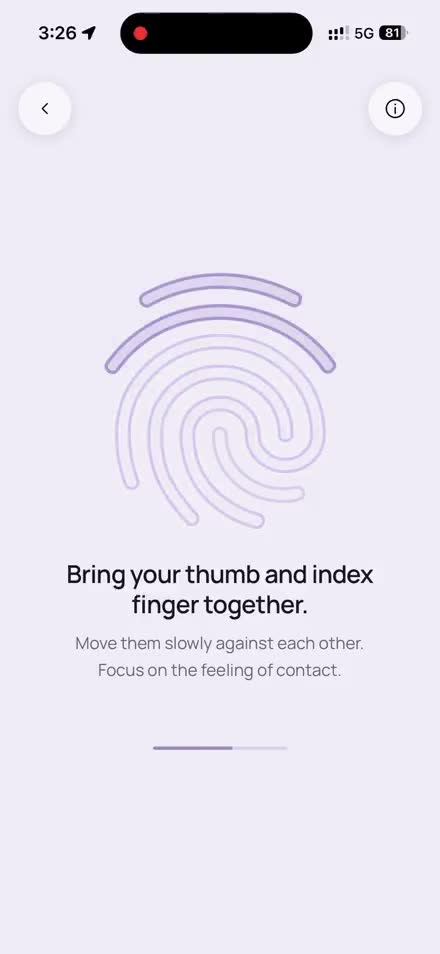
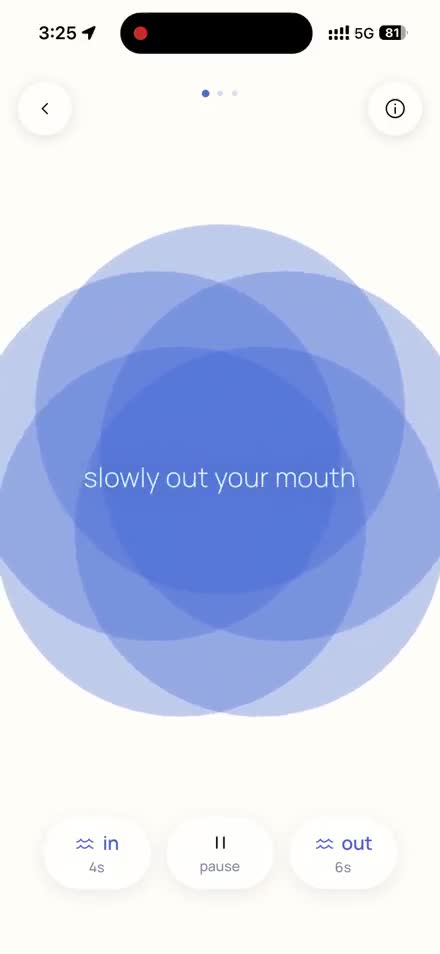
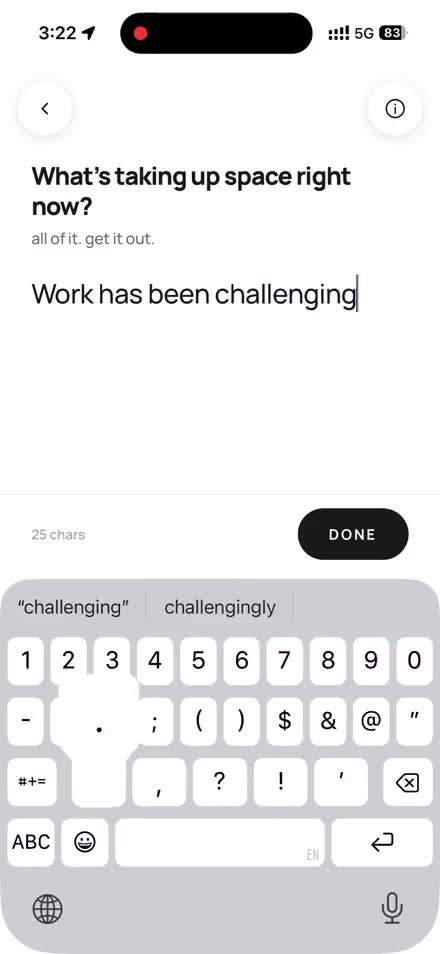
The skills, without the reading.
centered space puts these in your pocket as guided tools you can open mid-moment — no library to search, no account required to start.


Common questions
What are the best coping skills for anxiety?
The fastest are body-based, because they don't need the part of your brain that goes offline under stress: lengthen your exhale, get cold water on your face, move for thirty seconds, or run 5-4-3-2-1 grounding. Mind-based skills like naming the emotion, doing a brain dump, or reframing the thought work better once your body has settled a little.
How many coping skills do I actually need?
Two or three. In a real spike you won't recall a list of fifteen, so it's better to have one body-based skill and one mind-based skill practised until they're automatic. Practise them on ordinary days at low intensity so they're available at high intensity.
What's the difference between a coping skill and avoidance?
A coping skill lowers the intensity so you can face the thing; avoidance lowers the intensity by removing the thing, and usually charges interest. Scrolling, drinking, and cancelling all work in the short term and make the next occasion harder. A useful test: does this leave me more able to deal with it in an hour, or less?
What if a coping skill doesn't work?
Most people judge coping skills against the wrong standard. The goal isn't to erase the feeling — it's to take enough intensity off that you can think and choose. Taking a 9 down to a 6 is the skill working. If nothing shifts at all, that's usually a sign to switch categories rather than try harder at the same one.
Not medical advice. These are general wellness techniques, not treatment for a medical or psychiatric condition. If anxiety, low mood, or intrusive thoughts are affecting your daily life, talk to a doctor or a licensed therapist. If you're in crisis, contact your local emergency number or a crisis line.
Sources
- Linehan, M. (1993). Cognitive-Behavioral Treatment of Borderline Personality Disorder — origin of the DBT distress-tolerance skills referenced here.
- Lieberman, M. D. et al. (2007). Putting feelings into words: affect labeling disrupts amygdala activity. Psychological Science.
- Zaccaro, A. et al. (2018). How breath-control can change your life: a systematic review on slow breathing. Frontiers in Human Neuroscience.