Everyday practice
Gratitude journaling: does it actually work?
Gratitude is the practice most likely to be handed to you by someone who isn't struggling. That's a shame, because underneath the oversell there's something real — it's just smaller, and more specific, than you've been told.
The short answer
Yes, modestly. Gratitude practices show consistent small improvements in wellbeing, and the effects on depression and anxiety specifically are smaller than popular claims suggest. What makes the difference is specificity: three concrete things with a reason beats a generic list, and noticing people beats noticing possessions. It's a baseline practice, not a rescue tool — during acute distress, being told to count your blessings usually lands as dismissal.
What the research actually shows
The founding study asked people to write down five things they were grateful for once a week. Compared with groups writing about hassles or neutral events, the gratitude group reported better wellbeing and more optimism. That result has held up broadly, and gratitude is one of the better-supported practices in positive psychology.
The honest caveats matter just as much:
- The effects are small. Real, repeatable, and modest. Reviews looking specifically at depression and anxiety symptoms find gratitude interventions help less than the popular framing implies.
- It's a wellbeing practice, not a treatment. It shifts what you notice. It doesn't resolve a depressive episode.
- Much of the benefit may be attentional. Deliberately scanning your day for good things trains where your attention goes, which is the same underlying mechanism as most of the rest of this library.
Small and real is still worth five minutes. It just isn't the transformation it gets sold as.
Specific beats generic, every time
The difference between gratitude journaling that works and gratitude journaling that becomes a chore is almost entirely specificity.
"My family" is not an entry. You wrote it last week, you'll write it next week, and it produces nothing because you didn't actually have to look. "The way my daughter narrated the entire car journey without pausing" is an entry, because you had to go back through the day to find it.
The format that holds up
Three things, each with a because. The "because" is what forces the recall, and the recall is where the benefit lives — not in the list itself.
Notice people, not possessions
Entries about people tend to land harder than entries about things, and gratitude directed at a person you could actually tell is the strongest version of all.
You don't have to send anything. But if you find yourself writing about someone repeatedly, telling them is a small act with disproportionate returns, and it's a low-effort route into reconnecting with people when reaching out otherwise feels like too much.
Don't do it every day
One of the more counterintuitive findings: weekly beat daily in early research. Daily lists tend to habituate — by day nine you're writing "coffee" again and skimming your own entries.
Two or three times a week keeps it effortful enough to work. If daily suits you, vary the prompt rather than the frequency: today a person, tomorrow something your body did, the day after something that nearly went wrong and didn't.
When it's the wrong tool
This is the part usually left out, and it's the reason gratitude has a bad name among people who are genuinely struggling.
- In acute distress. Mid-panic or mid-crisis, gratitude is not the move. Use something physical — calm down first, and come back to this later.
- In grief. "At least you had those years" is not gratitude, it's a way of asking someone to stop being sad. Gratitude in grief has to arrive on its own.
- When it's being used to overwrite. If gratitude is how you avoid a legitimate problem — a bad job, a bad relationship — it stops being a practice and becomes a way to talk yourself out of noticing. Contentment shouldn't be a tool for tolerating something you need to change.
- When it turns into an obligation. "I should be grateful" reliably produces guilt, not gratitude. If your list is making you feel worse for not feeling better, stop.
This mirrors the caveat in calming mantras: a positive statement you don't believe doesn't lift you, it just adds the sense that you're failing at something simple.
Tools for this in the app

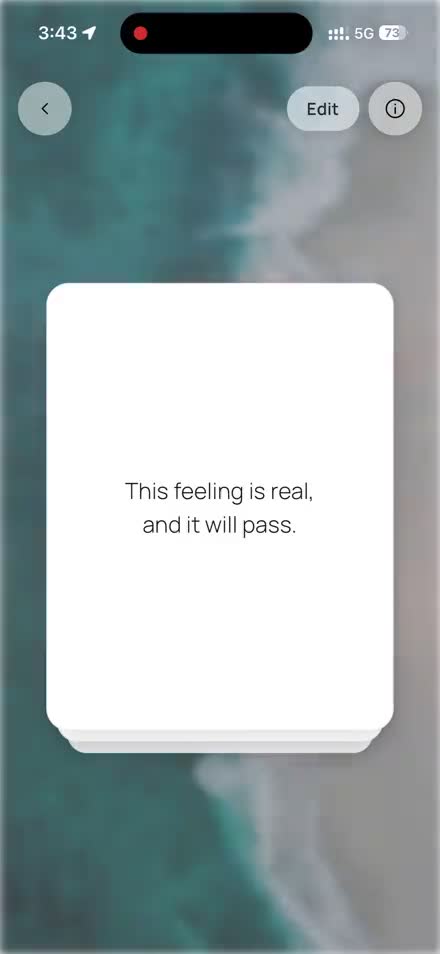
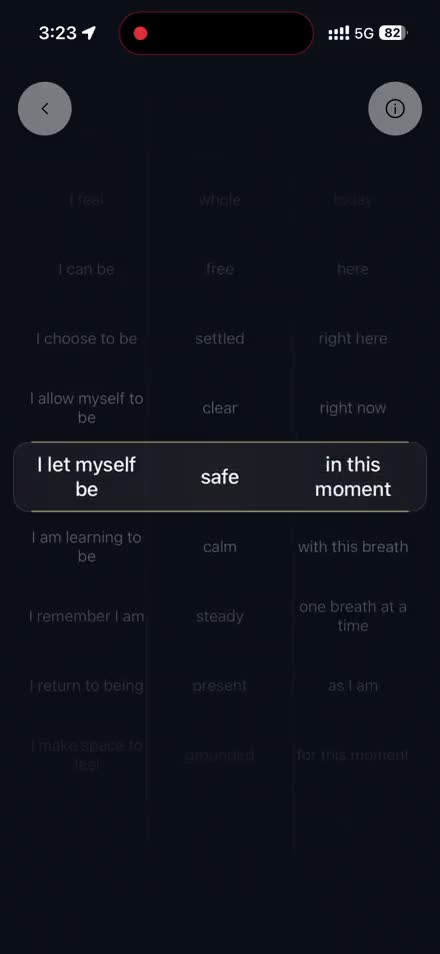
Guided, so you don't stare at a blank page.
Guided Gratitude walks you through the noticing rather than asking you to produce a list on demand — which is where most gratitude journals die.


Common questions
Does gratitude journaling really work?
Modestly, yes. Gratitude practices show consistent small improvements in wellbeing, and they're among the better-supported exercises in positive psychology. But the effects on depression and anxiety specifically are smaller than popular claims suggest — it shifts what you notice rather than resolving a clinical condition.
How often should I write a gratitude journal?
Two or three times a week tends to work better than daily. Daily lists habituate quickly — you start repeating entries and skimming your own writing — and early research found weekly practice outperformed daily. If you prefer daily, vary the prompt rather than the frequency.
What should I write in a gratitude journal?
Three specific things, each with a 'because.' Specificity is what separates a practice that works from a chore: 'my family' produces nothing because you didn't have to look, whereas a particular moment from the day forces you to actually go back through it. Entries about people tend to land harder than entries about things.
When is gratitude the wrong thing to practise?
During acute distress or panic, in fresh grief, when it's being used to avoid a real problem you need to change, or whenever it's become an obligation. 'I should be grateful' reliably produces guilt rather than gratitude. If the list is making you feel worse for not feeling better, stop and use something physical instead.
Not medical advice. These are general wellness techniques, not treatment for a medical or psychiatric condition. If anxiety, low mood, or intrusive thoughts are affecting your daily life, talk to a doctor or a licensed therapist. If you're in crisis, contact your local emergency number or a crisis line.
Sources
- Emmons, R. A. & McCullough, M. E. (2003). Counting blessings versus burdens. Journal of Personality and Social Psychology.
- Davis, D. E. et al. (2016). Thankful for the little things: a meta-analysis of gratitude interventions. Journal of Counseling Psychology.
- Cregg, D. R. & Cheavens, J. S. (2021). Gratitude interventions: effective self-help? A meta-analysis of the impact on symptoms of depression and anxiety. Journal of Happiness Studies.