Focus & ADHD
ADHD and emotional regulation
Everyone talks about ADHD and focus. Far fewer people mention that the feelings arrive at full volume with no warning, that a small criticism can flatten a whole day, and that you can go from fine to completely done in about four minutes.
The short answer
Emotional dysregulation is a core part of ADHD, not a separate problem — the same executive-function differences that affect attention also affect how quickly emotion arrives and how well it can be moderated. Feelings tend to hit faster, peak higher, and take longer to settle. What helps is catching it earlier (the body signals before the feeling names itself), lowering intensity physically before trying to think, and treating overwhelm as a load problem rather than a character problem.
This is part of the condition, not a personal failing
Emotional dysregulation isn't listed in the diagnostic criteria, which has left a lot of people assuming their intensity is a separate character flaw sitting alongside their ADHD. It isn't. It's widely recognised in the clinical literature as a core feature — the same executive-function differences that make it hard to hold attention also make it hard to hold a feeling at arm's length long enough to size it up.
Practically, that shows up as three things:
- Speed. There's very little runway between the trigger and the full feeling. Other people describe getting annoyed; you're already there.
- Amplitude. The feeling arrives at a volume out of proportion to the event, and you often know that at the time, which doesn't help.
- Duration. Coming back down takes longer. The event ended an hour ago; your body hasn't been told.
Rejection sensitivity
A great many people with ADHD describe an outsized, physical response to perceived criticism or rejection — a comment lands and it genuinely hurts, out of all proportion to its content. This is commonly called rejection sensitive dysphoria. It's worth knowing that it's a widely-used clinical description rather than a formal diagnosis, but the experience it points at is real and extremely common.
The most useful thing here isn't to talk yourself out of the reaction, which rarely works mid-surge. It's to build in a delay before responding. Almost every serious consequence of rejection sensitivity comes from what gets sent, said, or quit in the first ten minutes. Widening the pause is the highest-leverage skill available here.
The rule that saves the most damage
Nothing important gets sent inside the first hour. Write the reply if you need to write it — put it somewhere it can't send. If it still reads right tomorrow, send it tomorrow.
Overwhelm and shutdown
ADHD overwhelm doesn't usually feel like stress. It feels like a sudden loss of capacity — the task list stops being a list and becomes one solid wall, and you go still. From the outside it can look like laziness or avoidance. From the inside it's closer to a system refusing further input.
Treat it as a load problem. You don't argue with a load problem, you reduce the load:
- Get it all out of your head first. Holding an unsorted list in working memory is what's producing the wall. A brain dump costs five minutes and reliably shrinks it.
- Pick one thing, not the right thing. Choosing optimally is a second task on top of the first. Any one item, started, breaks the freeze.
- Move before you plan. Two minutes of physical movement gives you back more executive function than another twenty minutes of staring will.
- Check for the boring explanation. Hungry, angry, lonely, tired accounts for a genuinely embarrassing share of total collapses.
Catch it in the body first
The single most useful skill is buying yourself earlier warning. The feeling names itself late; the body signals early. Jaw, shoulders, chest, a specific restlessness in the hands or legs — most people have one reliable tell they've never consciously identified.
Finding yours is worth the effort, because a spike caught at 4 out of 10 is manageable in a way the same spike at 9 simply isn't. A body scan is how you learn your own signals, and naming the emotion once you catch it measurably takes some heat out.
What to do at the top of the wave
At high intensity, skip anything that requires reasoning. Go physical and go fast:
- Long exhale. The physiological sigh — two inhales, one long exhale — is the fastest lever most people have.
- Cold and abrupt. Cold water on the face or wrists. Blunt, but it interrupts.
- Discharge it. Stairs, a fast walk, anything that gives mobilised energy somewhere to go.
- Leave the room. Changing your physical context changes what your attention is being fed.
Save the thinking-based work — reframing, problem-solving, the difficult conversation — until you're back under about a 5. It's not that those don't work; it's that they don't work up there.
Where the dopamine piece fits
Emotional intensity and the pull toward quick stimulation are related — both trace back to how reward and regulation work in an ADHD brain. If the part you struggle with most is reaching for your phone, a snack, or a purchase the moment a feeling lands, natural ways to boost dopamine and urge surfing deal with that side directly.
Getting proper support
None of this is a substitute for assessment and treatment. If you suspect ADHD and haven't been assessed, that's the highest-value step available to you — medication, therapy, and coaching all have real evidence behind them, and self-management works considerably better on top of them than instead of them.
Tools for this in the app
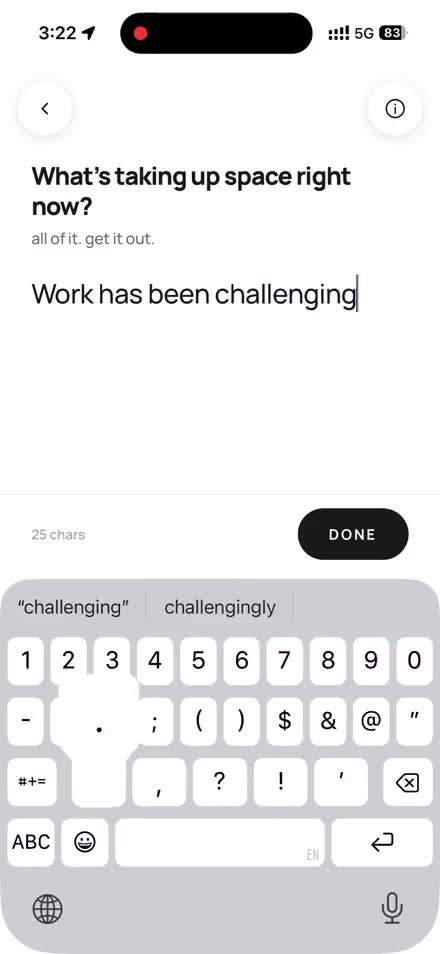
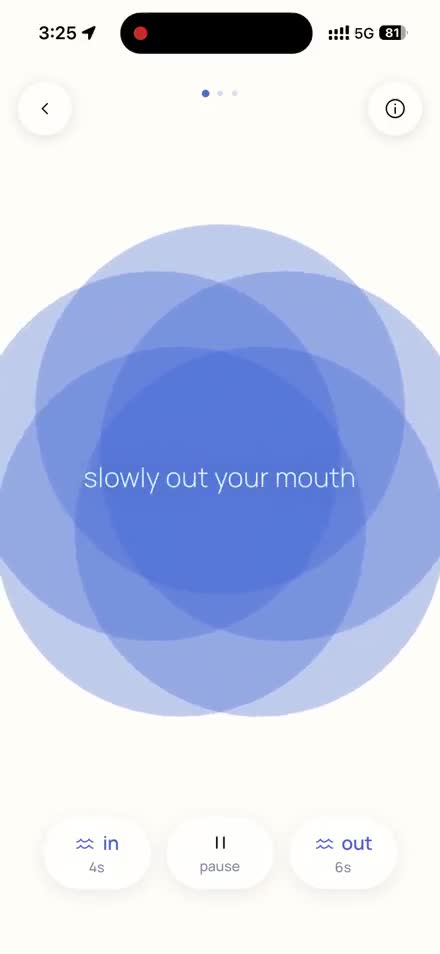

For the four minutes between fine and done.
centered space is built for exactly these moments — quick, guided tools you can open before the wave crests, made by someone with the same brain.


Common questions
Is emotional dysregulation part of ADHD?
Yes. Although it isn't in the formal diagnostic criteria, emotional dysregulation is widely recognised in the clinical literature as a core feature of ADHD. The same executive-function differences that affect attention also affect how fast emotion arrives, how high it peaks, and how long it takes to settle.
What is rejection sensitive dysphoria?
It describes an intense, often physical response to perceived criticism or rejection that many people with ADHD report. It's a widely-used clinical description rather than a formal diagnosis, but the experience is real and common. The most reliable strategy is building in a delay before responding, since most of the damage happens in the first ten minutes.
Why do I shut down when I'm overwhelmed with ADHD?
ADHD overwhelm tends to present as a sudden loss of capacity rather than as stress — the task list stops being separable items and becomes one wall. It's best treated as a load problem: get everything out of your head onto paper, pick any one item rather than the optimal one, and move physically before trying to plan.
What helps ADHD emotions in the moment?
At high intensity, use physical strategies rather than thinking-based ones: a long exhale, cold water on the face, movement to discharge the energy, or leaving the room. Save reframing and problem-solving until the intensity is down around a 5, because those skills need executive function that isn't fully available at the peak.
Not medical advice. These are general wellness techniques, not treatment for a medical or psychiatric condition. If anxiety, low mood, or intrusive thoughts are affecting your daily life, talk to a doctor or a licensed therapist. If you're in crisis, contact your local emergency number or a crisis line.